You may find yourself sleeping in your car at some stage, whether by accident or design.
This is preferable to finding a park bench or similarly exposed location to sleep in. However, you’ll still need to follow specific protocols to sleep in a car safely.
Find a location that permits overnight parking and tell somebody where you’ll be sleeping.
A parking lot with CCTV is recommended. Turn off your engine before sleep and open 2 windows (if safe) to allow air circulation. Stay hydrated and use wool blankets, not cotton.
Sleeping in a car isn’t a sustainable lifestyle, but it’s safe to do so for one or two nights.
Why Sleep in A Car?
You may need to sleep in a car in the following situations:
- Shut out of your home for the night, i.e., losing your keys and being unable to find a locksmith.
- You’re driving a long distance and struggling to keep your eyes open.
- Breaking down and having no way to reach the accommodation or not knowing where you are.
- You’re experiencing bad weather that makes it impossible to continue the journey.
- Having a hotel or motel reservation fall through unexpectedly or being unable to locate accommodation at short notice
A car may be the next best thing if you can’t find accommodation.
Is it Legal To Sleep in Your Car?
The legality of sleeping in a car can be something of a gray area. Under U.S. federal law, it’s not illegal to sleep in a private vehicle unless you’re breaking one of the following laws:
- Trespassing.
- Operating a vehicle while intoxicated, even if you’re sleeping with the engine off.
- Falling asleep while in control of a moving vehicle.
Federal and local laws aren’t always the same. For example, your state or city may declare it illegal to sleep in a car. Always check the legality before going to bed for the night.
Is It Dangerous To Sleep in A Car?
Sleeping in your car is risky, but you’ll likely stay out of trouble if you follow these safety tips:
Find a Safe And Permitted Location
When you want to sleep in a car overnight, the first step is finding the right location. It’s not always as simple as pulling over when you start yawning and bedding down for the night.
If locked out of your house, you can sleep in your car in a driveway or garage.
Ordinarily, sleeping in a vehicle while parked on a private street is okay, although you may need to be prepared for some interrogation from neighbors or residents.
Parking lots are trickier as you’ll be at the mercy of the owner’s rules.
Theoretically, a 24-hour supermarket is an excellent place to park and sleep overnight. The parking will usually be free, offer the protection of CCTV, and you’ll have easy access to a bathroom and supplies.
Many parking lots belonging to private businesses have rules, including policies that deny loitering or parking for more than a couple of hours. Check signage and ensure you’re not breaking any rules.
Wherever you sleep, let somebody know where you’ll be overnight. Send a text message, or better yet, share your exact location through GPS.
Also, have an explanation ready if somebody knocks on the window to ask questions.
Prepare An Escape Route
Wherever you settle down for the night, scope the area ahead of time. You may need to leave quickly, so ensure you know exactly where to drive.
With this in mind, consider sleeping in the driver’s seat of your car with your seatbelt on.
The front of many vehicles offers more space than the back, and as we’ll discuss shortly, you can still make yourself warm and comfortable in this part of the automobile.
Turn Off the Engine
Sleeping in your car with the engine off is the only safe way to spend the night in an automobile. While leaving the engine running may generate more heat, it’s hazardous and economically inefficient.
For starters, leaving your engine running generates carbon monoxide. Carbon monoxide is odorless and tasteless, so you won’t know if you’re inhaling it.
Leaving the engine on could put you at risk of accidentally moving your car at night. You should have the parking brake on while you sleep, but if you forget, you could roll forward or back.
Allow Oxygen
Temperatures in most cities and states will drop overnight, even if you’re sleeping somewhere with a reputation for warmer climes. This means you’ll be tempted to close all windows to stay warm.
Is it safe to sleep in a car with the windows closed? Due to this risk, we don’t keep pets in cars with the windows closed. The same applies to humans, even when the sun has long since set.
The best approach is to crack open two windows, ideally the two furthest from your head.
We mean crack, not open. Winding windows too low are a security risk. By leaving a couple of inches of open space, you’ll allow the air in your car to circulate.
This will prevent you from becoming uncomfortable during the night, as you won’t breathe in the same stale air and won’t drain your car’s battery by leaving the air conditioner running overnight.
Stay Warm
Although you’ll need to let in some cool air to allow yourself to breathe overnight, it’s still important to stay warm. While Sleep confirms that a drop in ambient temperature encourages sleep, you’re unlikely to doze off if you’re shivering.
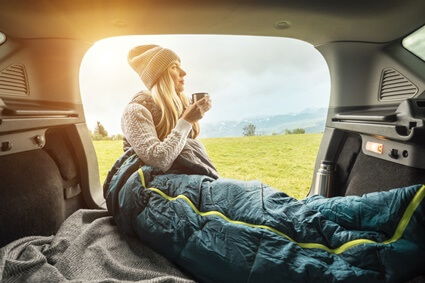
Sleeping in the driver’s seat is the best way to stay warm and comfortable. Fold the back seats down and recline your seat like a bed, or drop the passenger seat if you prefer sleeping on your side.
Pack wool blankets if you’re planning to sleep in your car. Wool is a natural thermal insulator, while cotton will attract moisture and steadily grow colder overnight. While planning, you may as well pack a travel kettle, water, and a hot water bottle.
If you find yourself sleeping in your car unexpectedly, heat a water supply and apply it to a plastic bottle. This won’t last as long as a hot water bottle nor provide as much heat, but it may help you fall asleep.
Protect Yourself from the Sun
You may fall asleep at night when the sun has gone down, but it’ll return in the morning. If you sleep in your car during the summer, the sun may be blazing early the following morning.
You may like the idea of being woken by the sun, as it’ll help you recommence your drive, but it’s equally likely that you’d prefer a gentler introduction to the morning.
Moreover, direct sunlight could burn your skin or damage your possessions.
Before sleeping in your car, apply shades on as many windows as possible. If you don’t have formal sun blockers, use clothing or other objects in the vehicle.
Hydrate
When packing a car to sleep in, you’ll likely remember blankets, pillows, and other core sleeping paraphernalia. Always keep ample water in the car, ideally around 5 liters.
If you need to pull over and sleep in your car overnight, it won’t always be somewhere with easy access to essential supplies. Also, there may not be a gas station for miles around.
If you’re hungry, that’s not ideal. If you’re thirsty, it’s outright dangerous.
If you grow dehydrated, your mind and body will suffer, and you may find it challenging to focus on containing your drive in the morning. Keep hydrated overnight to remain sharp.
Keep Your Cellphone Charged
It makes sense to have a fully charged cell phone before you attempt to spend a night in your car.
Always be prepared to make an emergency call. Even if you’re in the middle of nowhere, have no signal, or your phone is cut off due to a lack of payment, you can still dial 911.
You can also be tracked if you keep your cell phone on. This may be essential when expecting a rescue if you have broken down. This depends on whether you have a smartphone, as some appliances have low battery life.
Conserve your cellphone charge by reducing the contrast on your display, deactivating unnecessary apps, and keeping use to a minimum. Browsing the web, streaming videos, or listening to music may help pass the time but can also drain the battery.
Use the Bathroom Before Sleep
BMC Urology explains that cold temperatures increase the need for comfort breaks, and sleeping in a car is often cold. Where will you empty your bladder, though?
If you’re parked at the side of the road of a suburban neighborhood, options may be limited.
Even if you’re parked in a rural location or a parking lot with bathroom facilities, you’ll leave your car to do what needs to be done. That’s a security risk, and it allows any warm air to escape.
If you empty your bladder before hunkering down for the night, you’re likelier to make it through to morning without needing to eliminate again with great urgency.
Be Wary of Strangers
Sleeping in your car is likely to attract attention. As mentioned, it’s worth having an answer ready if somebody asks why you’re sleeping in a vehicle.
Police officers are the likeliest to pose this question. In this instance, be honest and direct. Be wary of anyone approaching, as someone may claim to be a resident and start interrogating you.
Be careful about who you engage with while sleeping in a car.
Ask for ID when somebody claims to be approaching you professionally and query their intentions. Know your rights – it may be illegal to demand you move because somebody dislikes you sleeping in a car.
Also, be wary of anybody insisting that you leave your car. If you’re sleeping in a vehicle, you may be vulnerable because an opportunistic car thief may see this as a chance to take your vehicle.
Sleeping in a car isn’t recommended as a lifestyle choice, but it can be done securely.